Modular belt conveyor systems are transforming how contemporary manufacturing facilities approach flexibility and efficiency. By combining durable materials, easy assembly, and adaptable configurations, these systems support rapid line changeovers, high uptime, and scalable throughput. This article, written from an expert perspective, examines the key benefits of modular belt conveyors for flexible production lines and highlights practical considerations for selecting a system that best fits evolving manufacturing needs.
Flexibility for Changing Product Flows
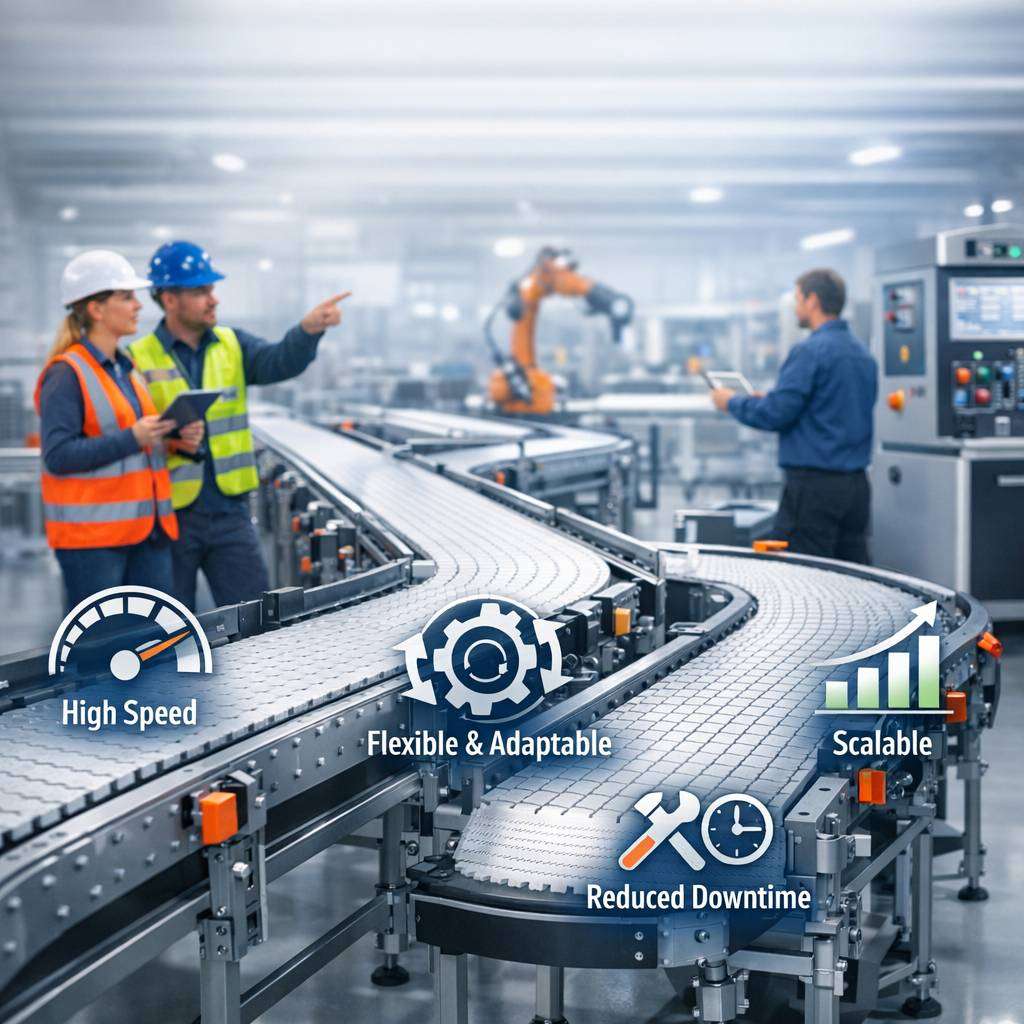
One of the most significant advantages of modular belt conveyor systems is their inherent adaptability. The modular design employs interlocking slats or belts that can be reconfigured, extended, shortened, or re-routed with relative ease. For operations that frequently adjust product lines, this means quicker line changes, reduced downtime, and less need for bespoke equipment. Whether transferring small components or larger items, a modular belt conveyor can be re-mapped to accommodate new process steps, improving overall workflow efficiency.
Minimal Maintenance and High Reliability
Modular belt conveyors are engineered for durable performance in demanding environments. The belt is composed of modular pieces connected to form a continuous loop, offering robust resistance to impact and wear. The absence of complex chains in many configurations reduces lubrication requirements and potential contamination, which is particularly advantageous for hygiene-sensitive industries. Regular inspection can be straightforward, with common wear points replaced quickly without specialised tools, contributing to higher line uptime and lower maintenance costs.
Quick Assembly and Retrofit Capabilities
Bespoke line construction can be time-consuming and expensive. In contrast, modular belt systems are designed for rapid assembly and retrofit. Components such as curves, transfers, and diverters can be snapped together and secured with standard fasteners. This modularity enables engineers to prototype line layouts, test throughput, and implement improvements with minimal disruption. For facilities facing seasonal demand or product mix changes, the ability to scale or reconfigure swiftly is a decisive competitive advantage.
Compatibility with Diverse Products and Destinations
Modular belt conveyor systems are well-suited to handling a wide range of products, from small electronics to larger automotive components. The belt material, surface texture, and width can be tuned to reduce slippage, minimise damage, and ensure stable conveyance. In agricultural settings, for instance, agricultural belt conveyors must handle varying sizes and shapes while maintaining gentle handling for delicate produce. The adaptability also extends to transfers between conveyors, merges, and indexing systems, enabling seamless integration across a fully automated production line.
Cleanliness and Contamination Control
In sectors with stringent hygiene or contamination control requirements, modular belt conveyors offer clear benefits. The modular belts can be composed of plastics designed for easy cleaning, with smooth surfaces that resist harbouring bacteria. The absence of oil- or grease-filled gear drives in some configurations reduces contamination risk. For belt conveyor manufacturers near me that prioritise cleanability, modular systems provide a practical path to compliant, audit-ready operations.
Efficient Space Utilisation and Layout Optimisation
Space utilisation is a critical consideration in modern factories. The compact footprint of many modular belt conveyors, coupled with the ability to create tight radii curves and multi-tier configurations, helps operators optimise floor plans. Modular designs can negotiate tight corners and create compact transfer points, enabling more efficient routing of product through the line. In addition, compact transfer points and integrated merges can reduce the need for intermediate equipment, lowering capital expenditure and footprint.
Simplified Maintenance Scheduling
The predictable, modular nature of these systems simplifies maintenance planning. Standardised spare parts, common wear components, and straightforward diagnostics reduce the time required for servicing. Condition monitoring can be integrated at key junctions to anticipate belt wear, motor health, and drive alignment. This approach supports a proactive maintenance culture, contributing to longer equipment life and fewer unplanned shutdowns.
Compatibility with Packaging and Automation Levels
A belt conveyor system can be tailored to support varying degrees of automation, from semi-automatic staging to fully automated, high-throughput lines. Modular belts are compatible with sensors, actuated stops, and diverters that enable precise product handling, synchronised transfers, and quality control checks. For manufacturers exploring the latest automation trends, modular belt conveyors provide a scalable pathway to higher levels of process control without overhauling the core conveyance system.
Supplier and Market Considerations
When evaluating belt conveyor manufacturers near me, several factors come into play. A reputable belt conveyor company will offer comprehensive support, from system design and project management to installation and aftersales service. Look for manufacturers with demonstrable experience in your sector, whether it be general manufacturing, food and pharmaceuticals, or agricultural applications. A strong partner can provide customisation options, including bespoke drive configurations, surface finishes, and protective enclosures to meet industry standards.
In selecting a belt conveyor system, consider whether the modular belt conveyor systems align with your process requirements, future growth plans, and budget. The relationship with a reliable belt conveyor manufacturer should extend beyond procurement to ongoing technical support, spare parts availability, and opportunities for performance optimisation.Engage with a belt conveyor company that can deliver end-to-end solutions—from initial concept through commissioning and ongoing maintenance.
https://www.mknorthamerica.com/Products/flat-belt-conveyors/low-profile-belt-conveyor-guf-p-2000/
Modular belt conveyor systems offer flexible layouts, easy maintenance, and scalable automation for varied production lines, improving throughput and reducing downtime while cleanly integrating with sensors, controllers, and ergonomic workstations across industries that require reliable, efficient material handling.
Modular belt conveyor systems streamline production lines with flexible, scalable design and easy maintenance. They support diverse applications, from sorting to packaging, enhancing efficiency and uptime. For more information, visit https://conveyorrollers.co.uk.
System Architectures and Integration
A well-conceived modular belt conveyor system integrates seamlessly with other production equipment. Designs often feature standardised drive modules and belt materials that can be swapped or extended. For lines that require precise product spacing or indexing, modular systems can incorporate timing belts, zero-speed sensors, and servo-driven transfers. In automated environments, the ability to integrate with SCADA and MES systems supports real-time monitoring, control, and data analytics for process optimisation.
Enduring Value and Return on Investment
Although modular belt conveyors represent a strategic investment, the long-term financial case is compelling. Reduced downtime, faster changeovers, lower maintenance costs, and improved product handling contribute to a lower total cost of ownership. For businesses that demand agility—whether catering to seasonal peaks, custom orders, or evolving product lines—modular belt conveyor systems deliver durable, scalable value that aligns with modern flexible production paradigms.
In summary, modular belt conveyor systems offer a practical, future-ready approach to building flexible production lines. Their combination of ease of assembly, reliability, and adaptability makes them a smart choice for manufacturers looking to stay competitive in dynamic markets. Whether you operate in general manufacturing, packaging, food processing, or agriculture, exploring modular belt conveyor systems can unlock significant improvements in throughput, quality, and responsiveness.