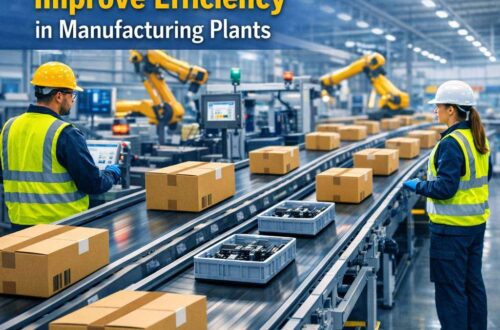
Manufacturing is an industry that continuously evolves to meet the demands of global markets, consumer expectations, and technological advancements. One of the most transformative innovations in recent decades has been the integration of conveyor systems. These mechanical devices have significantly enhanced operational efficiency, reduced labour costs, and improved safety standards across a wide range of manufacturing sectors. As experts in industrial solutions, it is essential to understand how conveyors are reshaping manufacturing processes and why investing in modern conveyor systems is a strategic choice for forward-thinking businesses.
The Role of Conveyor in Manufacturing
A conveyor, in its simplest form, is a mechanical apparatus designed to transport materials, components, or products from one point to another within a facility. Their primary purpose is to facilitate the smooth and continuous movement of goods, reducing manual handling or inefficient transportation methods.
In manufacturing environments, conveyors serve multiple functions:
- Streamlining assembly line operations by ensuring steady material flow
- Minimising manual labour involved in material transfer
- Reducing product handling times, thus increasing throughput
- Enhancing workplace safety by limiting the need for workers to carry heavy or bulky items
The utilisation of conveyors in manufacturing plants not only improves productivity but also contributes to higher consistency in product quality, as automated movement reduces the risk of damage or contamination during handling.
Types of Conveyors and Their Applications
Manufacturers have access to a diverse array of conveyor types, each tailored to specific operational requirements. These include:
Belt Conveyors
Ideal for transporting a variety of items, belt conveyors are among the most common conveyor systems. They consist of a continuous loop of a durable material (such as PVC or rubber) fitted over pulleys, enabling smooth movement. Belt conveyors are suitable for handling lightweight to heavy items, including boxes, pallets, and bulk materials.
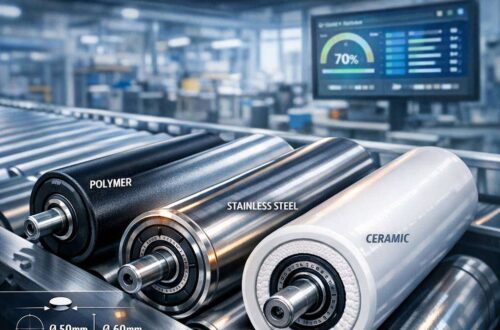
Roller Conveyors
Consisting of cylindrical rollers that facilitate the movement of items via gravity or powered rollers, roller conveyors are often used for assembly lines or sorting tasks. They are particularly effective in transporting items with flat bases, such as cartons or pallets.
Chain Conveyors
Employing linked chains to move items, chain conveyors are robust and capable of handling heavy or bulky goods. They are common in applications requiring steep inclines, or where items need to be precisely positioned during manufacturing steps.
Modular Conveyors
Flexible and customisable, modular conveyor systems can be configured to fit complex layouts, including curved or multi-level pathways. They are frequently utilised in facilities that demand adaptable solutions.
Vertical Conveyors
Designed for moving items between different height levels, vertical conveyors are vital in facilities with multiple floors or significant elevation differences, improving spatial utilisation and flow efficiency.
By selecting the appropriate conveyor type, manufacturers optimise their operations, ensuring that each stage of the production process is seamlessly connected.
How Conveyor Systems Enhance Manufacturing Efficiency
Implementing conveyor systems offers a spectrum of benefits that collectively revolutionise manufacturing performance:
Increased Throughput
Conveyor systems facilitate continuous movement, enabling factories to operate at higher speeds without bottlenecks. Automated transport reduces downtime associated with manual handling, ensuring a steady flow of materials in tandem with production cycles.
Labour Cost Reduction
With conveyors managing the bulk of repetitive transport tasks, businesses can optimise labour allocation. Skilled workers are freed from mundane transportation duties and can focus on more specialised tasks, leading to overall labour cost savings.
Improved Safety Standards
Manual handling of heavy or hazardous items poses safety risks. Conveyors mitigate these risks by mechanising movement, decreasing workplace accidents, and ensuring compliance with health and safety regulations.
Consistency and Precision
Automated conveyor systems minimise variability in handling, reducing errors, product damage, and contamination. This consistency enhances product quality and customer satisfaction.
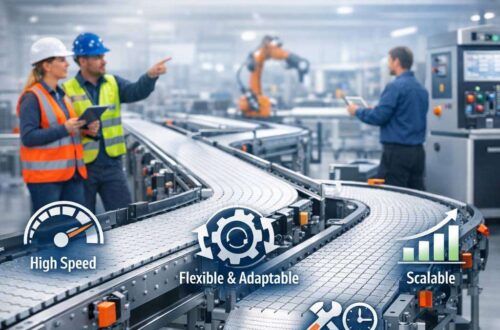
Flexibility and Scalability
Modern conveyor systems can be customised or expanded to accommodate production volume changes. This flexibility allows manufacturers to scale operations efficiently without significant disruptions.
Energy Efficiency
Newer conveyor technology prioritises energy-saving features, such as low-power motors and automatic speed controls. Efficient energy use contributes to sustainability goals and reduces operational costs.
Conveyors are essential components in modern foodservice operations, offering efficient and consistent food movement. They improve productivity by automating the transfer of items between stations, reducing manual labor. For reliable conveyor equipment, visit https://www.vollrathfoodservice.com/products/countertop-equipment/cooking-equipment/conveyor-toasters/conveyor-toasters/ct2-120350. These conveyors are built to enhance workflow and ensure high-quality service in busy kitchens.
Integration with Automation Technologies
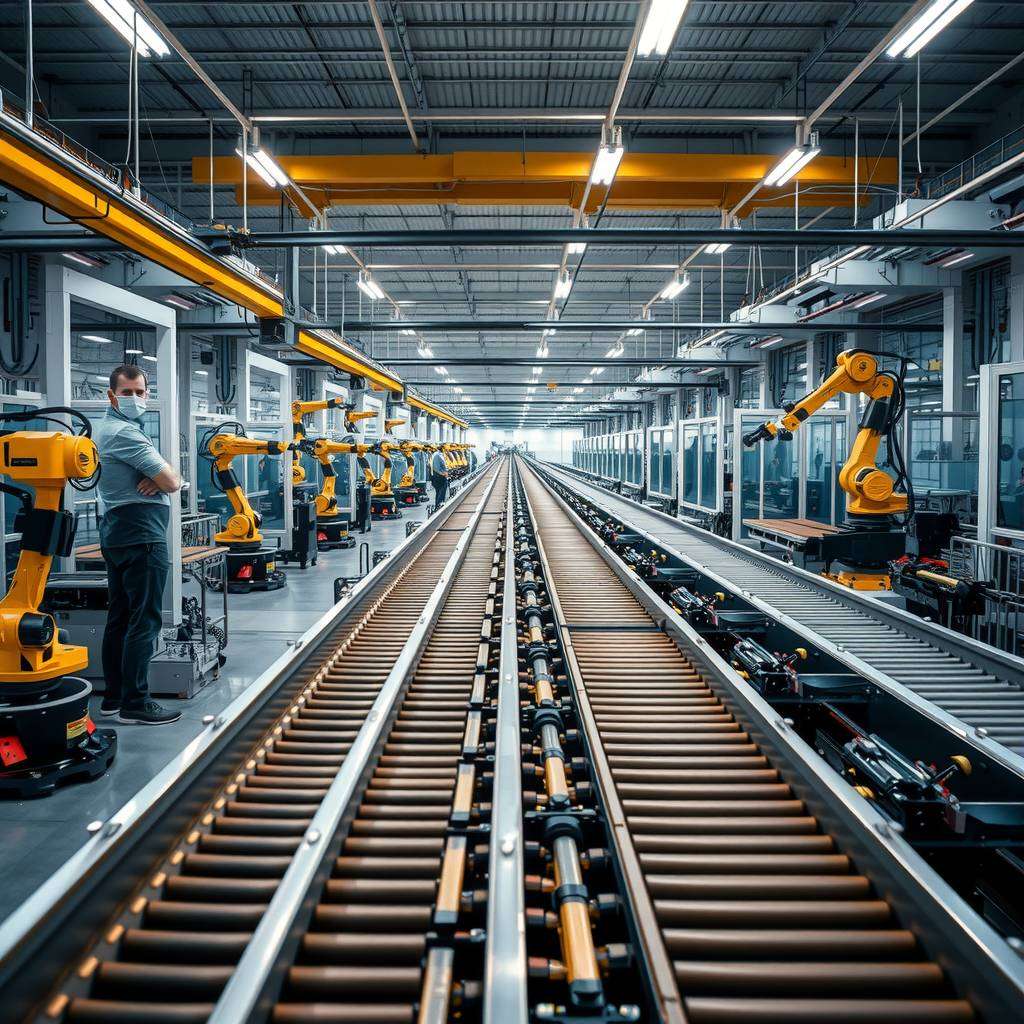
Conveyor systems seamlessly integrate with robotics, sensing devices, and warehouse management systems. This integration facilitates end-to-end automation, increasing overall plant productivity.
Future Trends in Conveyor Technology
As manufacturing continues to adopt Industry 4.0 principles, conveyor systems are evolving rapidly. Some emerging trends include:
- Smart Conveyors: Equipped with sensors and IoT connectivity, enabling real-time monitoring, predictive maintenance, and data-driven optimisation.
- Modular and Customised Solutions: Easily adaptable systems designed to meet uniquely complex layout needs.
- Energy-efficient Designs: Incorporating regenerative drives and energy management systems to reduce carbon footprint.
- Collaborative Robots and Conveyors: Combining automation with collaborative robotics to improve flexibility and safety.
These advancements promise to further enhance manufacturing efficiency, cost-effectiveness, and agility.
Conclusion
Conveyor systems have fundamentally transformed manufacturing landscapes by enabling faster, safer, and more reliable material handling. From simple belt conveyors to complex automated systems, the strategic integration of conveyors empowers manufacturers to achieve higher productivity levels, optimise resource utilisation, and adapt swiftly to market demands. As technology progresses, conveyor solutions will continue to innovate, underpinning the ongoing evolution of efficient, resilient manufacturing industries.
Conveyors are essential in streamlining manufacturing and logistics processes. By using conveyors, businesses can improve efficiency and reduce manual labor. Whether for packaging, assembly lines, or material handling, conveyors provide reliable solutions to optimize workflow and increase productivity across various industries.